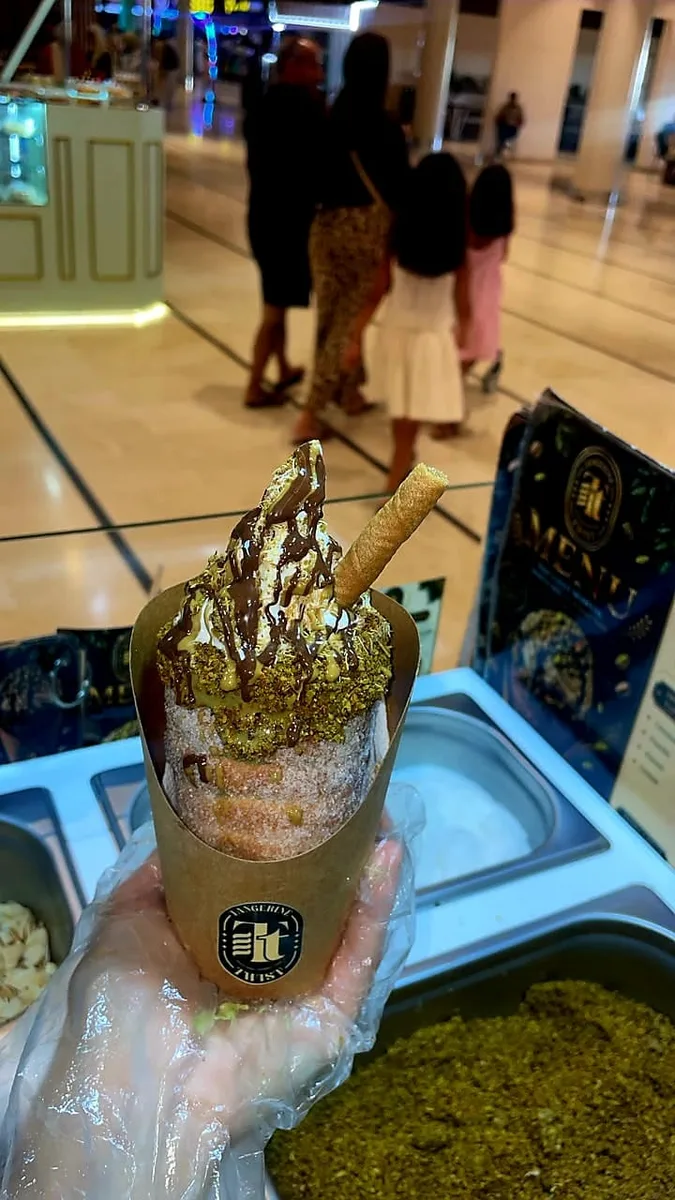

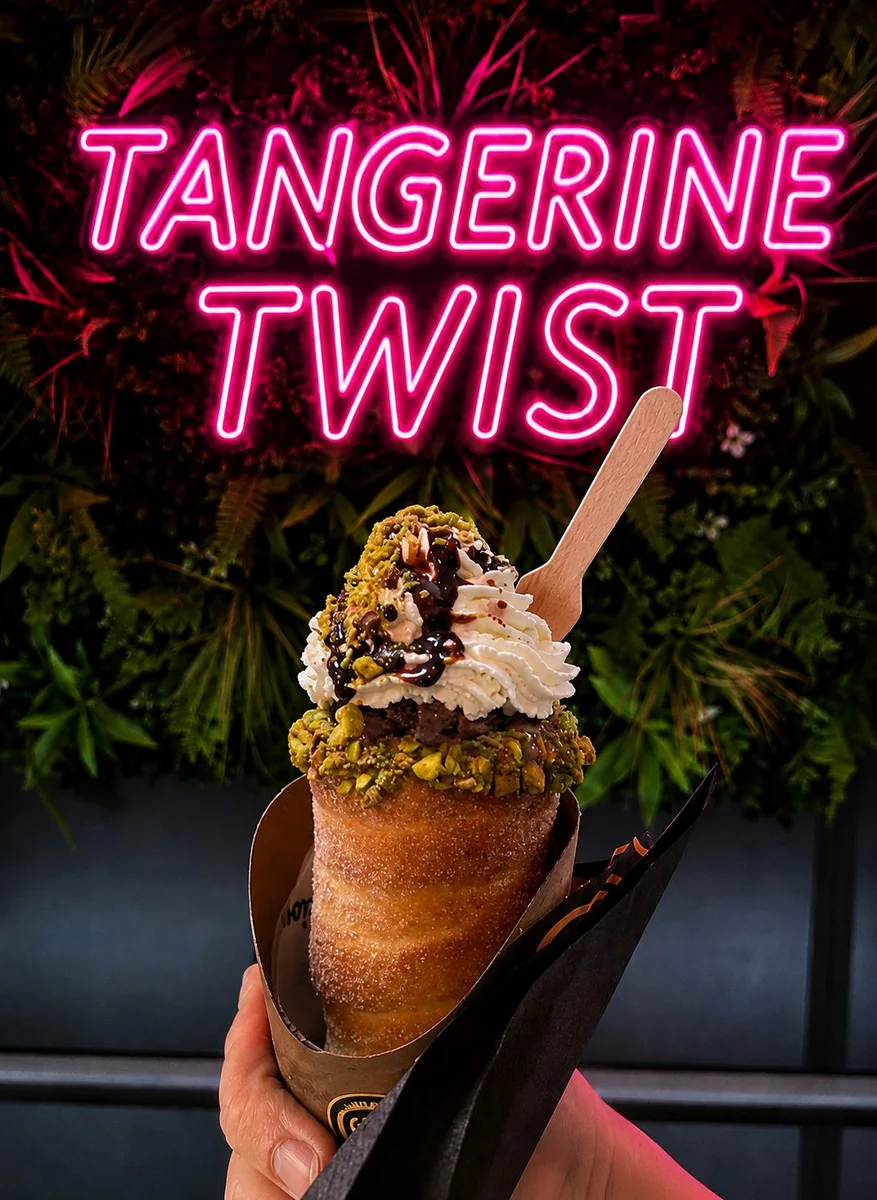
If you’ve ever walked past Tangerine Twist and caught the irresistible aroma of caramelized sugar, toasted nuts, and sweet, baking dough, you’ve experienced the magic of the chimney cake. Crispy on the outside, incredibly soft and fluffy on the inside, and shaped like a hollow cylinder, this unique pastry is a feast for the senses.
But before it became a beloved treat here in Tangier, the chimney cake had a long, fascinating journey. Let's take a trip back in time to discover the origins of this legendary dessert.
A Treat Born in Hungary
The chimney cake traces its roots back over 300 years to the heart of Hungary, eventually becoming a beloved staple in the bustling streets and winter markets of Budapest.
Originally, it was a festive treat reserved for special occasions like weddings, christenings, and the arrival of important guests. Families would gather around an open fire, taking turns rotating the wooden spits to ensure the cakes baked evenly. It was a communal pastry, baked with love and shared in celebration.
"The earliest records of this unique baking method show it was a staple of Hungarian festivities long before it became a worldwide sensation."
Historians believe the technique of wrapping dough around a spit and roasting it over hot coals has evolved over centuries, perfecting the art of the fire-roasted sweet bread.
What's in a Name?
The name "chimney cake" translates directly from its traditional Hungarian roots, referring to the stovepipe or chimney of a classic coal stove.
The reason for the name becomes obvious the moment it finishes baking. When the cake is pulled off the baking spit fresh from the oven, steam billows out of its hollow center, making it look exactly like a smoking chimney!
The Art of the Bake
Making a traditional chimney cake is as much an art form as it is baking. It requires patience, precision, and the perfect dough.
- The Dough: It starts with a sweet, yeast-based dough, enriched with butter, milk, and eggs.
- The Wrap: Once the dough has risen, it is cut into a long, continuous ribbon and carefully coiled around a wooden, cylindrical baking spit.
- The Roll: The dough is rolled flat to seal the edges together and then brushed with melted butter and generously coated in coarse sugar.
- The Roast: The spit is placed over a heat source and rotated slowly. As it bakes, the sugar melts and caramelizes, creating the signature glossy, crispy crust, while the inside steams into a soft, fluffy bread.
The Journey to Tangier
For centuries, the chimney cake remained a well-kept Eastern European secret, traditionally coated only in sugar or perhaps a dusting of crushed walnuts. However, over the last decade, this historic street food experienced a global renaissance. Bakers began experimenting with the classic recipe, introducing new coatings like cinnamon, coconut, and cocoa. Soon, the shape evolved into a cone, turning the chimney cake into an edible vessel for premium soft-serve ice cream, Nutella, fresh fruit, and pistachio cream.
Today, you don't need to book a flight to Budapest to experience an authentic chimney cake. At Tangerine Twist, we've mastered the traditional techniques to bring this centuries-old European classic right to the heart of Tangier.
Whether you prefer the classic, warm cinnamon-sugar crunch or a modern, decadent cone loaded with rich fillings and ice cream, you are tasting a piece of culinary history with every bite.
Next time you stop by Tangerine Twist, watch the steam rise from your freshly baked chimney cake and remember—you're holding a 300-year-old tradition in your hands.